
Introduction
This review will be anything but unbiased, as we are the official distributor for Fellow products in BeNeLux! It's already available for presale, at this link:
Our first encounter with Aiden was in late January 2024, when Caroline and Josh from Fellow showed us an early prototype in a backstage room at the Ambiente show in Frankfurt. We got to try a brew from a Geisha they brought and we were definitely impressed. It was immediately clear that this was not grandma's drip coffee maker, but a machine that has the potential to rival the best manual pour-over brews.
The first units are expected (fingers crossed) for arrival in Europe late september, but Fellow was so kind to send us a pre-production unit to review 2 weeks ago.
We would like to share our early impressions here. Some features might be updated in the final version. Our unit didn't have Wi-Fi, the manual was partially translated, etc.
In less than 2 weeks it's clear that we'll have a Aiden in our lives forever as it's perfect for us! Let's hope this review can help you determine if it's the right machine for you too.
First impressions
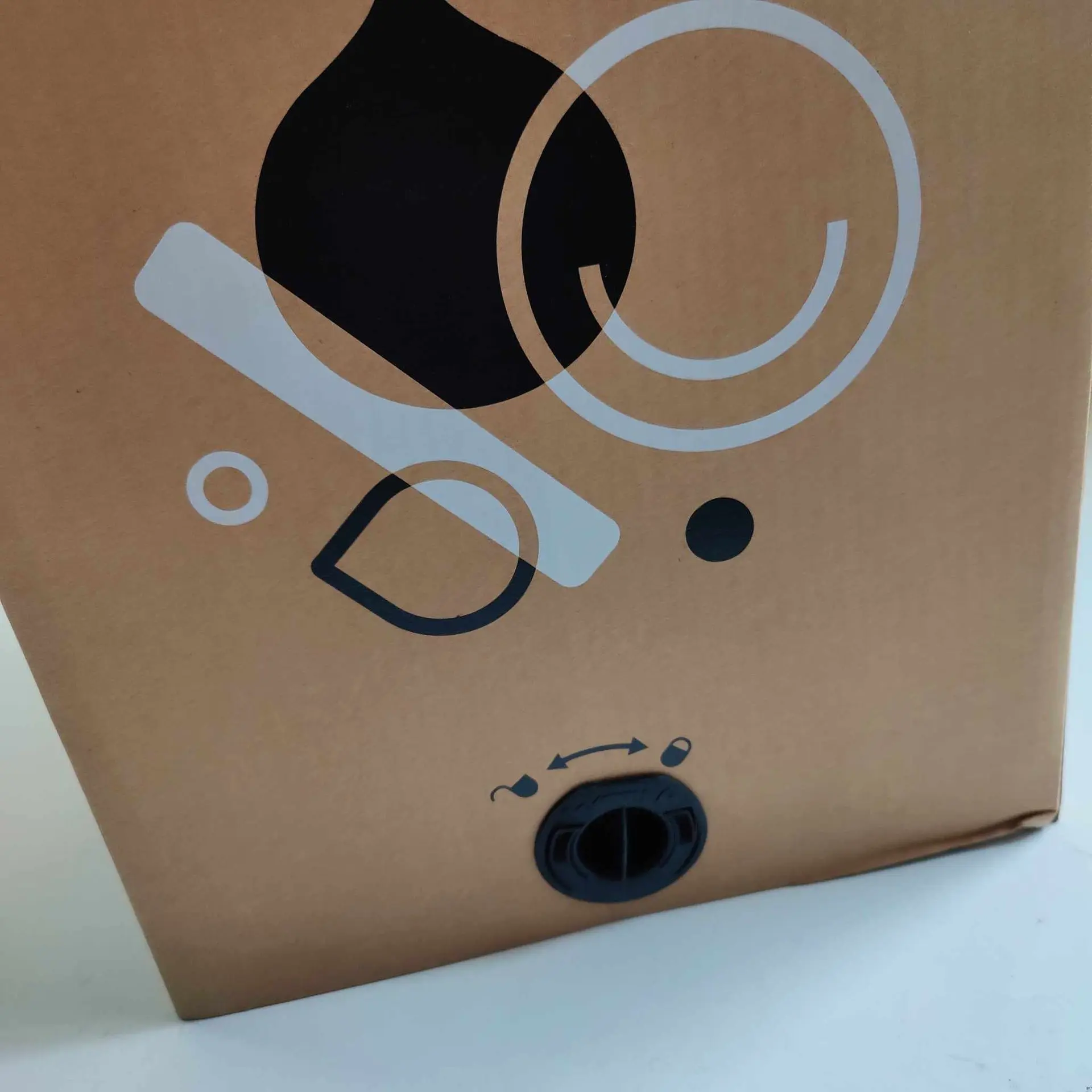
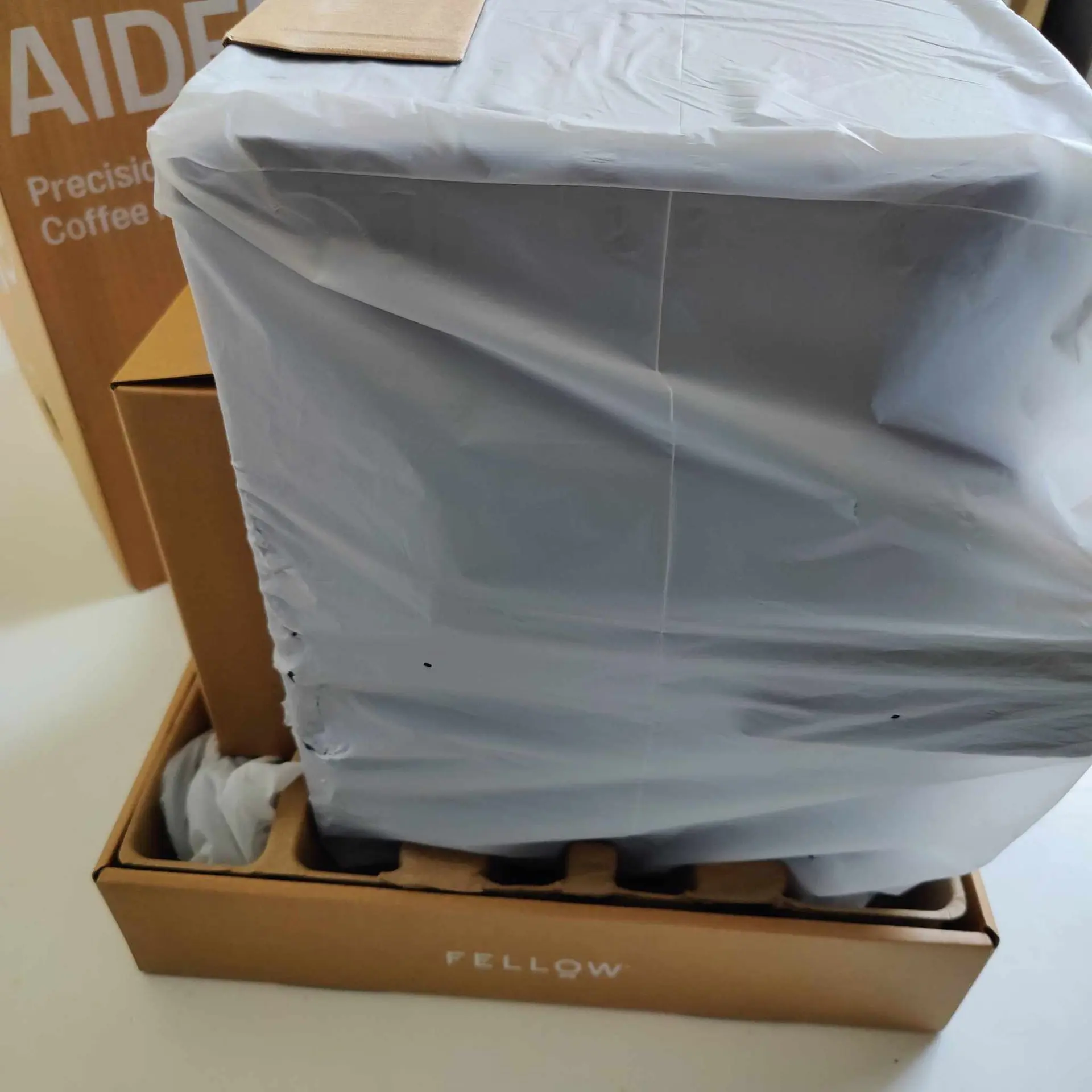
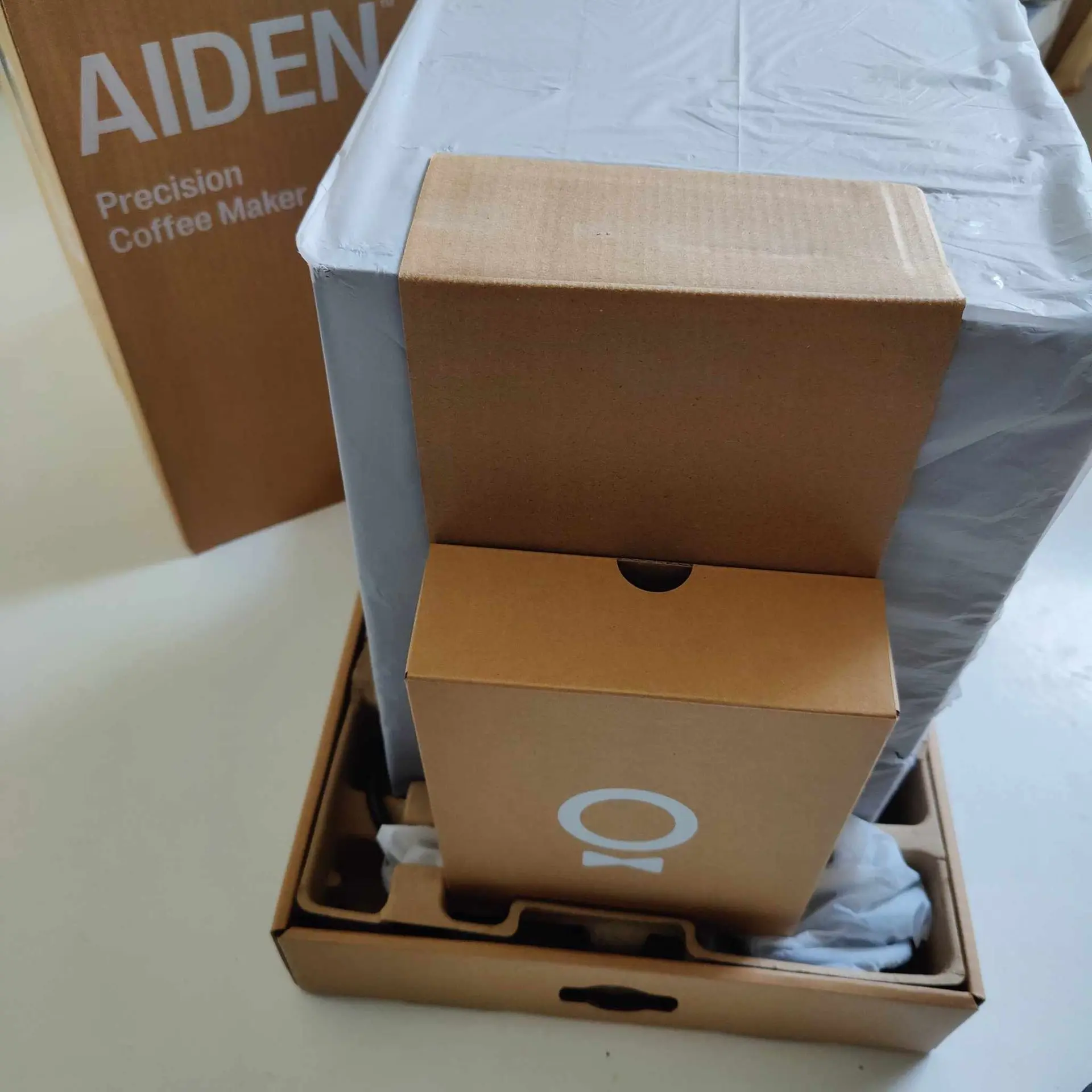
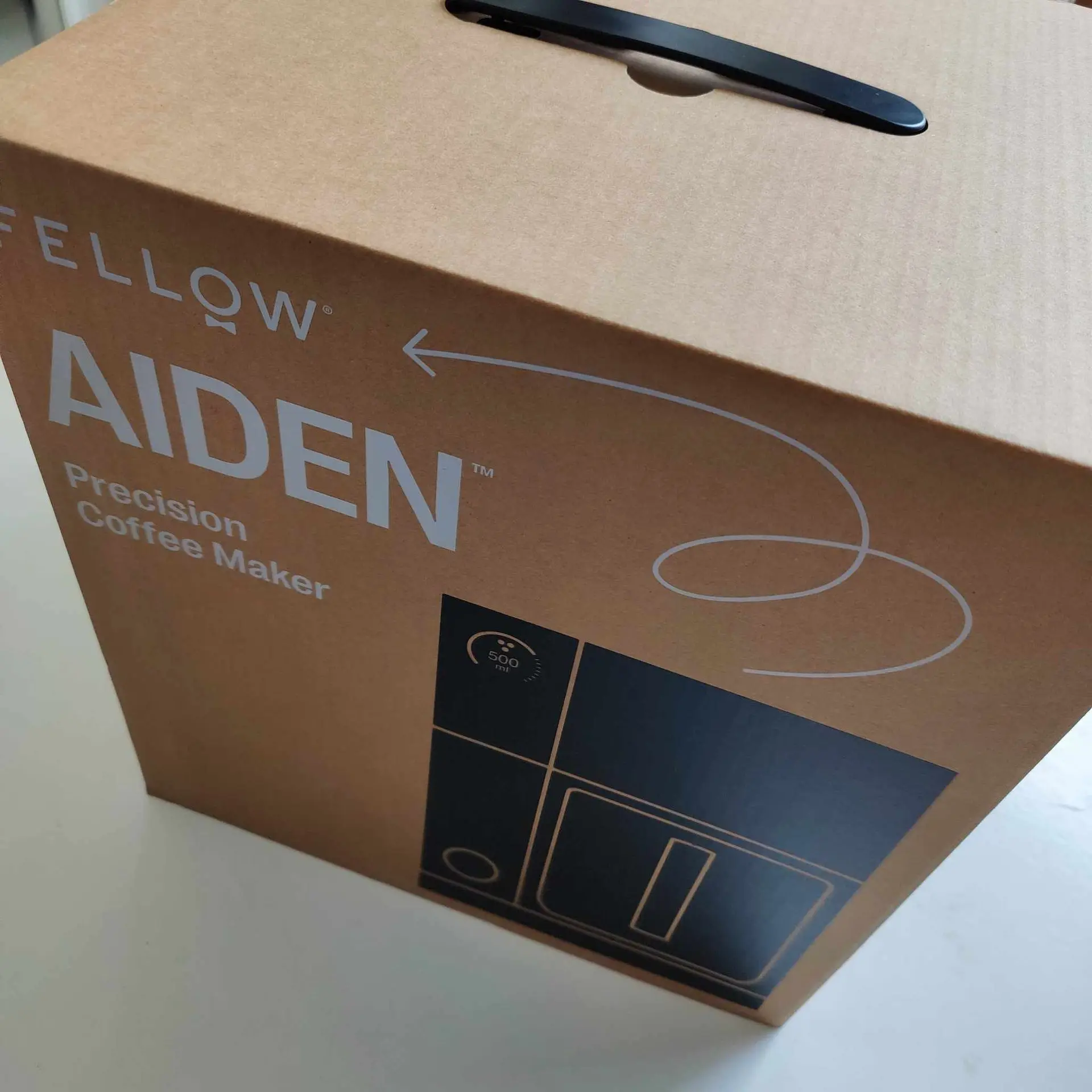
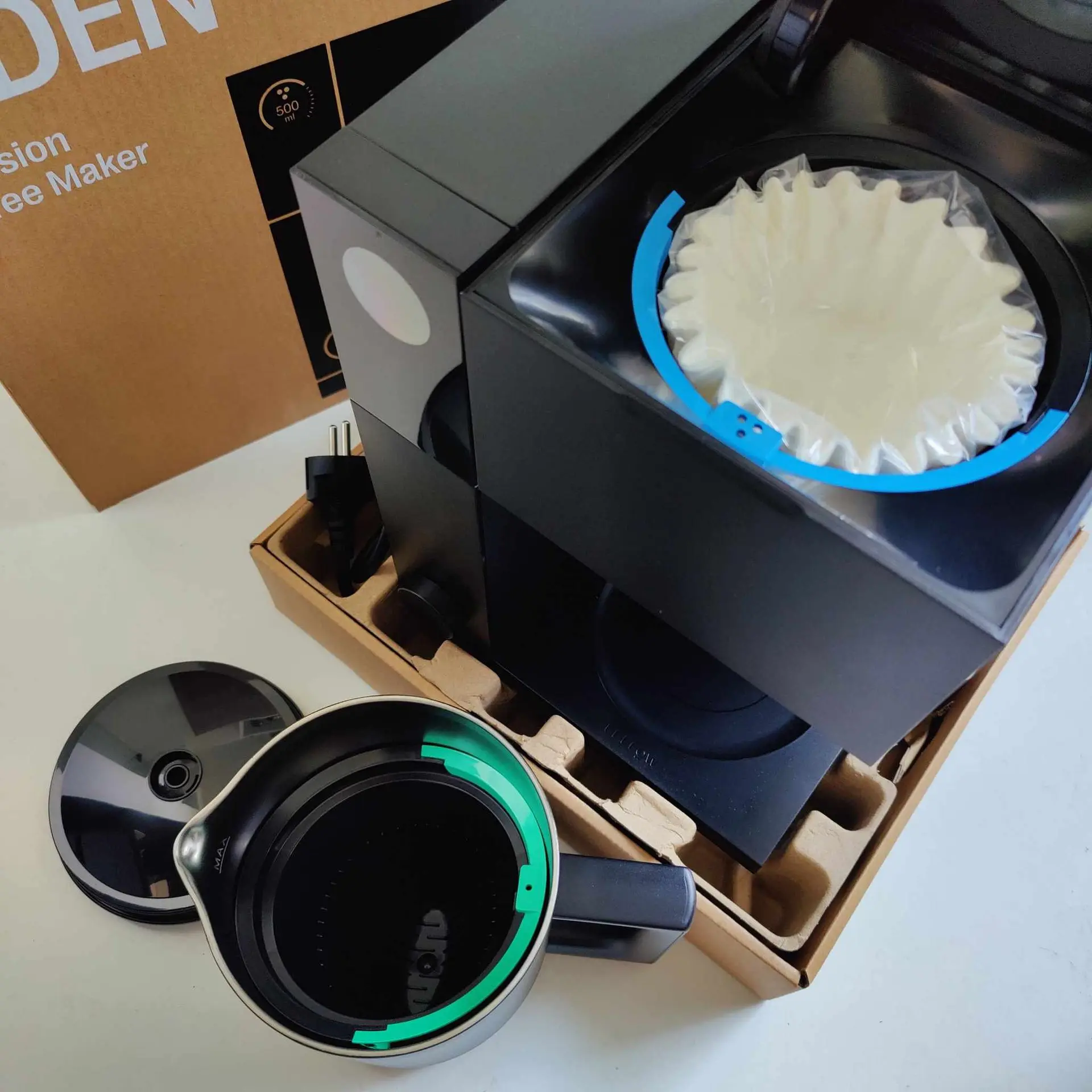
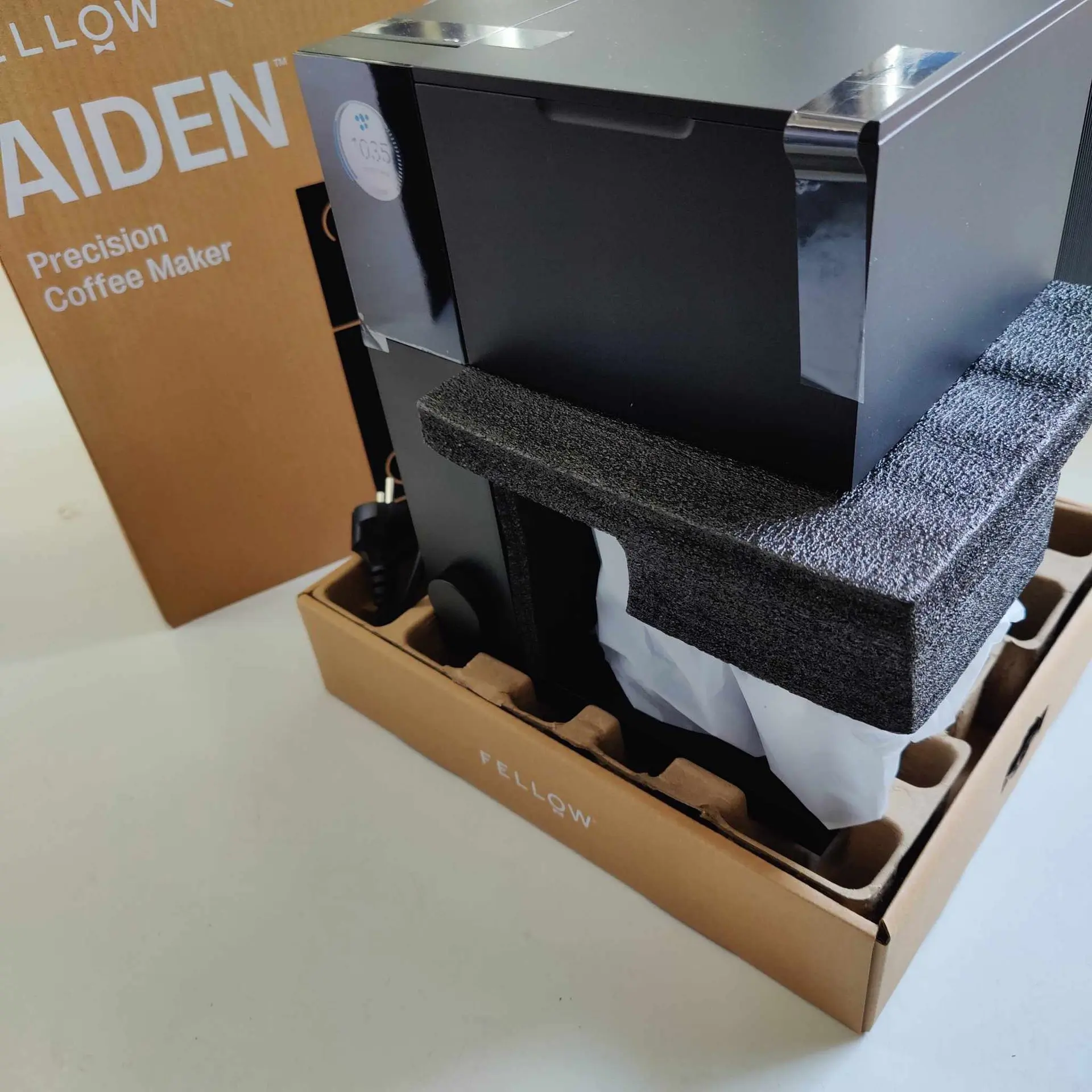
I'm not the kind of person that's into unboxing videos, but Fellow did a nice job of packaging Aiden. The inside box has a hood that's fixed with 2 plastic latches, and it does a great job protecting what's inside. I'm glad the majority of Aiden is made from plastic, as the weight would be ridiculous if aluminium was used for the body. With a full water tank, it's still easy to move out of the way when needed. Just keep in mind you'll have to re-enter the time and day of the week when you unplug the power.
Some background in how we usually do pour-overs. When in need of batch brew for larger events, we employ 2 Bravilor Junior machines. It does an ok job for this, as we usually stop it after bloom, stir the slurry for even agitation and then let it carry on brewing. The bravilor brews are fine, but a little weak even with extra manual manipulation.
We have a lot of manual brewers from Cafec, Kono, Hario, Kalita, Orea, etc. Our usual go-to' s are the Hario V60 decanter if we're looking for clarity and lower TDS brews, and the Fellow Stagg X brewer for more extraction.
The Stagg X is double walled so has good heat retention, and we use a Flair Pro2 puck screen below the filter paper as a 'flow booster'. We also use a negotiator to flatten the wave filter to minimize bypass.
Recently we have also added the Samo-bloom into our brewing routine. Samo was one of Sara's teachers at the Zurich university (CAS in coffee excellence). He discovered that more volatile aromatics are preserved when using colder water for the bloom stage.
So when Aiden arrived, we of course totally ignored the included recipes (light, medium and dark roast) and created our own recipe based on our manual pour-over experience. So a 70°C Samo bloom of 1m15s, followed by 5 pours of declining temperature from 94°C to 92°C. We used the blue cone shaped basket with the maximum amount of water for that one (450ml, with a 1:17 ratio demanding 26,5g coffee). We tried some very different coffees over the past weeks, our own roasts but also beans from our friends at MOK, replica, monogram, coffee collective, the picky chemist, etc.
The first results were very interesting! We did not expect to get results that were this well-extracted and intense! The results were almost 'too good'.
So we started to dial back some settings to see if that would introduce more clarity and give a weaker brew.
First of all; temperature. Aiden uses a closed environment for brewing, there's even a seal between the basket and the top lid. Compared to a V60, there's definitely less heat dissipation. We're currently at a 60°C Bloom, with pulses going from 92°C to 90°C.
But we also shortened the bloom time. when performing Samo blooms in the manual world, using only 1 kettle, the bloom time is the time it takes the kettle to go from 70°C (bloom temp) to 94°C (pulse temp). this is usually 1m15 to 1m30. With Aiden, our bloom time is now 30s and we can probably dial it a down a little more.
We also reduced the number of pulses to 3, to lower agitation. The first pulse is at 92°C, the second at 91°C and the final one at 90°C, with 10s time between pulses. Again, we'll probably diver deeper into temperatures once we get more familiar. We're currently just replicating the behavior of a regular kettle.
In an Aiden recipe, you also select the amount of pulses when using the batch brew basket. This is a flat bottom basket that's wider than a Kalita, Orea or Fellow Stagg X and can brew a LOT of coffee if needed.
Our batch pulses are currently set to 2 pulses, 25s in between, the first at 92°C and the second one at 90°C.
You can obviously create a completely different recipe for batch brewing of single cup brewing but it's nice that the recipe we just created can be used for anything from a single 150ml cup to a 1,5l family party!